The Pyramids of Giza
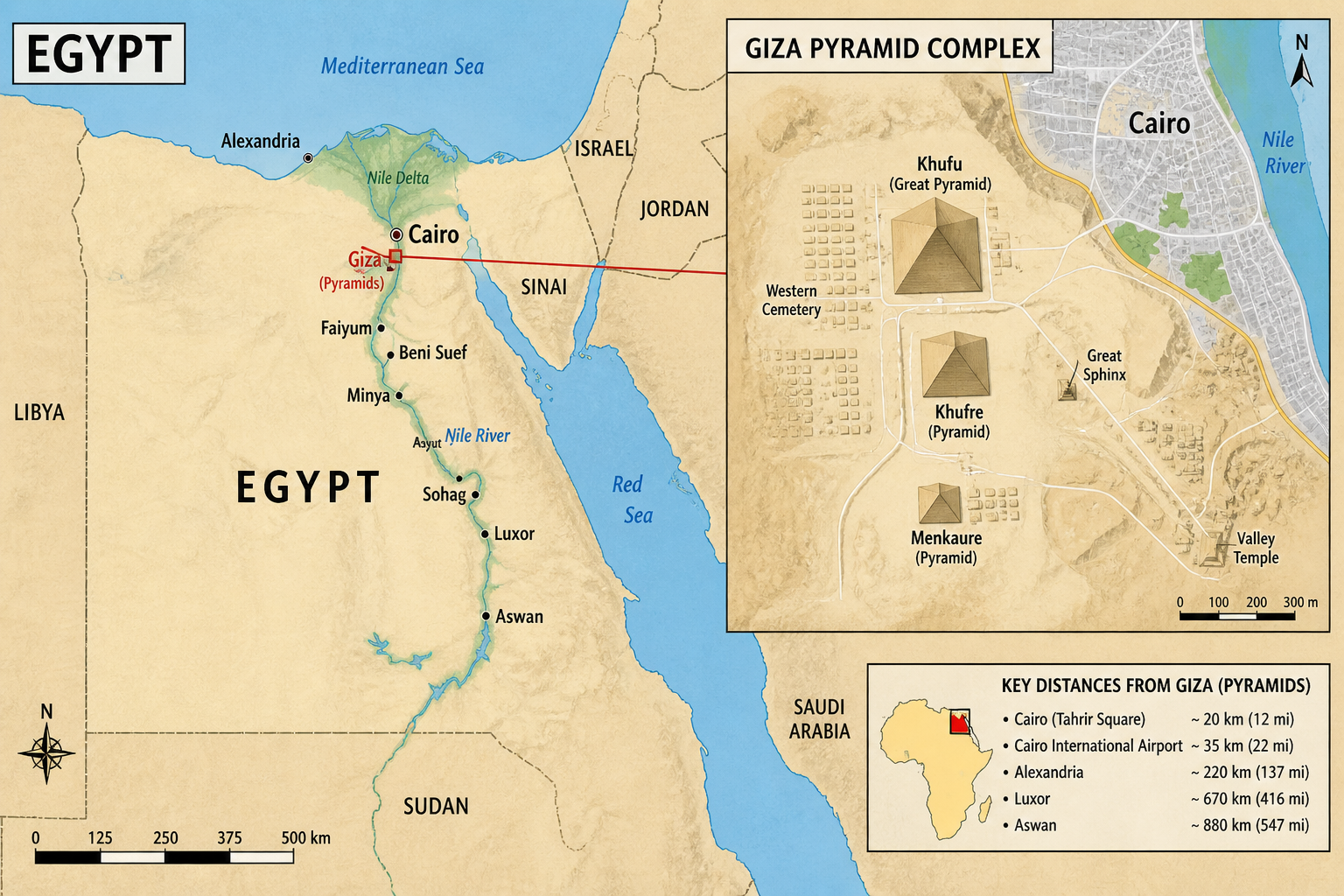
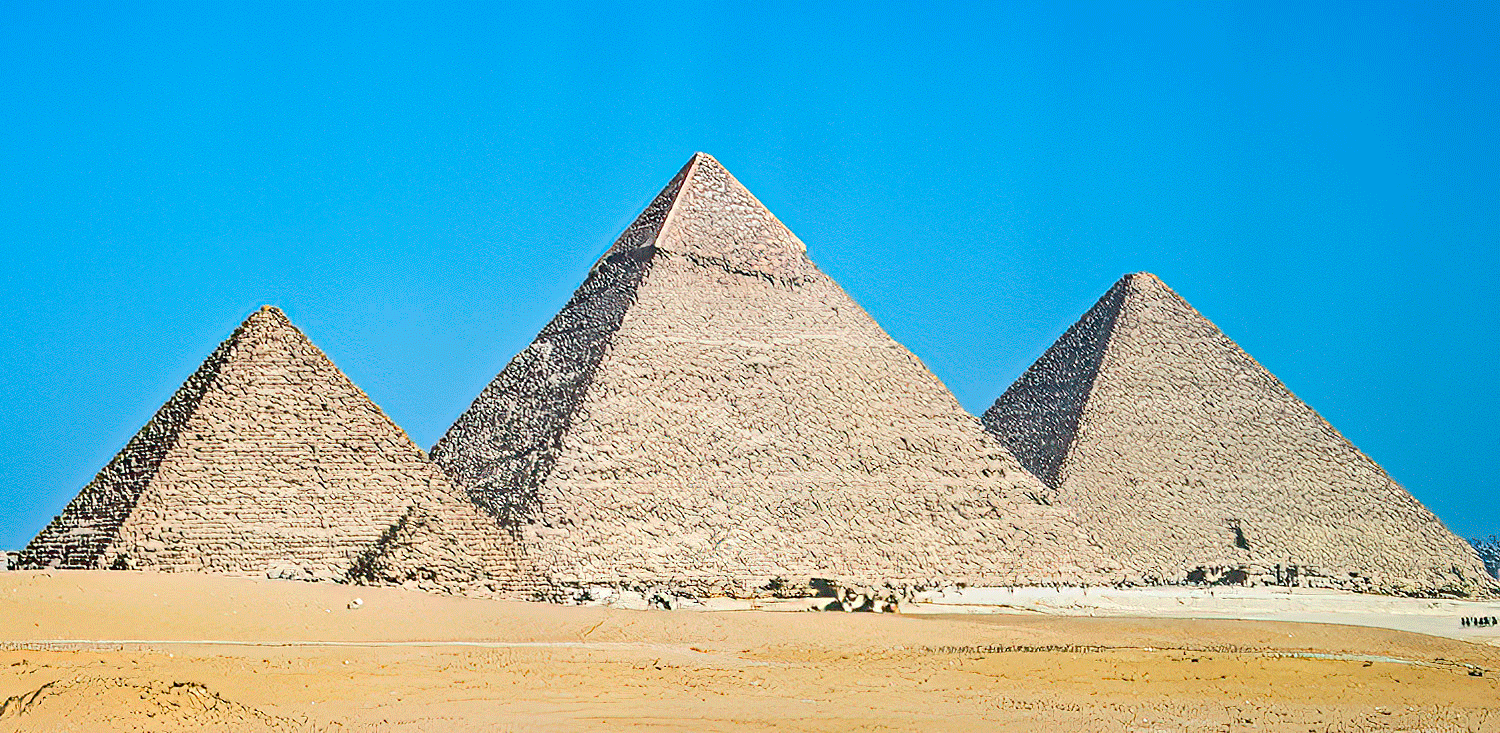
The pyramids of Giza rise from the western edge of the Nile as the most enduring structures of the ancient world. Built more than four thousand years ago during the Fourth Dynasty of Egypt’s Old Kingdom, they stand just outside modern Cairo, their placement carefully chosen on the west bank of the river, the side associated with death and the setting sun. The complex includes three primary pyramids, a network of smaller satellite structures, ceremonial causeways, temples, and the imposing form of the Great Sphinx of Giza, which has watched over the plateau for millennia.
At the center of the complex stands the Great Pyramid, built for the pharaoh Khufu. Constructed around 2580 to 2560 BC, it originally rose to a height of approximately 481 feet, though time and the removal of its outer casing stones have reduced it to about 455 feet today. Each side of its base stretches roughly 756 feet, forming a nearly perfect square aligned with the cardinal directions. The structure contains an estimated 2.3 million stone blocks, most weighing several tons, assembled with a precision that remains difficult to replicate even with modern tools. Inside, a series of chambers and passageways extend through its mass, including the King’s Chamber, the Queen’s Chamber, and the long, ascending corridor known as the Grand Gallery. The Great Pyramid is the only surviving structure from the Seven Wonders of the Ancient World, a distinction that reflects both its scale and its enduring mystery.
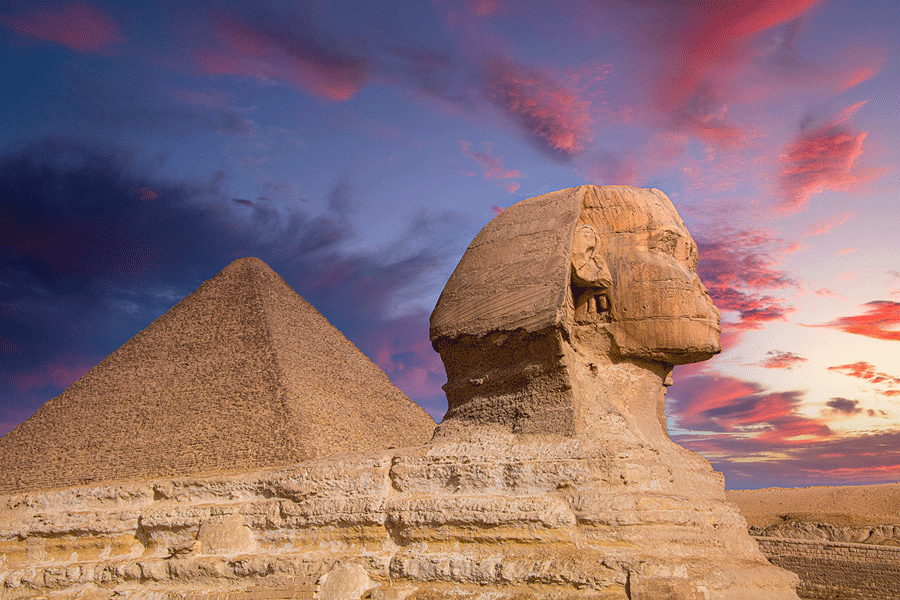
Nearby stands the pyramid of Khafre, the son of Khufu. Though slightly smaller in measured height, it appears taller due to the elevated ground on which it was built. Its summit still retains remnants of the original smooth limestone casing, offering a glimpse of how all three pyramids once appeared, gleaming in the desert sun. This pyramid is closely associated with the Great Sphinx, suggesting a unified design that extended beyond a single monument to encompass a broader ceremonial and symbolic landscape.
The third pyramid, built for Menkaure, is smaller but more intricate in its construction. Rising to about 213 feet, it incorporates granite in its lower courses, a material far more difficult to quarry and transport than limestone. Though less imposing in scale, it reflects a refinement in design and construction that suggests the continuation of an evolving architectural tradition.
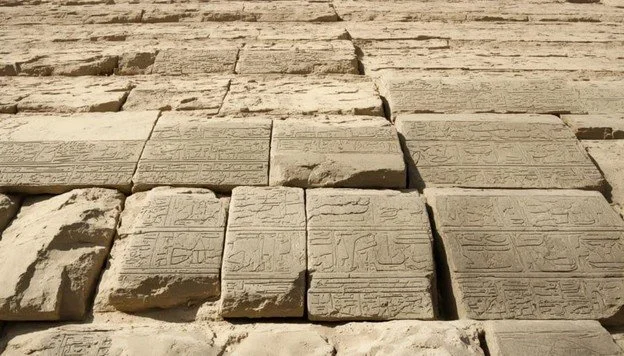
Archaeological evidence indicates that these structures were not built by enslaved populations, as once believed, but by a highly organized workforce composed of skilled laborers, engineers, and seasonal workers. Remains of workers’ villages nearby show evidence of planning, provisioning, and care, including food supplies and medical treatment. The construction methods remain a subject of study, but most evidence supports the use of large ramp systems, copper tools for shaping stone, and coordinated labor teams capable of moving and placing massive blocks with remarkable accuracy.
The precision of the pyramids extends beyond their physical construction. The Great Pyramid is aligned almost perfectly to true north, with a deviation of only a fraction of a degree. Its base is level to within inches across a vast area, and its proportions suggest an understanding of geometry that includes relationships approximating constants such as pi. Whether these relationships were intentional or incidental remains debated, but their presence continues to draw attention.
Traditionally, the pyramids are understood as monumental tombs, built to house the bodies of pharaohs and to support their journey into the afterlife. In ancient Egyptian belief, the ruler was both king and divine figure, and the pyramid served as a symbolic structure connecting the earthly realm to the heavens. Its shape may have represented rays of the sun, linking the pharaoh to the sun god Ra and ensuring his continued existence beyond death.
For a modern observer, the pyramids stand at the intersection of history and possibility. They are proof of what was achieved, and at the same time, an invitation to ask what else might have been intended.
That question is where the story begins.
Photos by D. Nessi
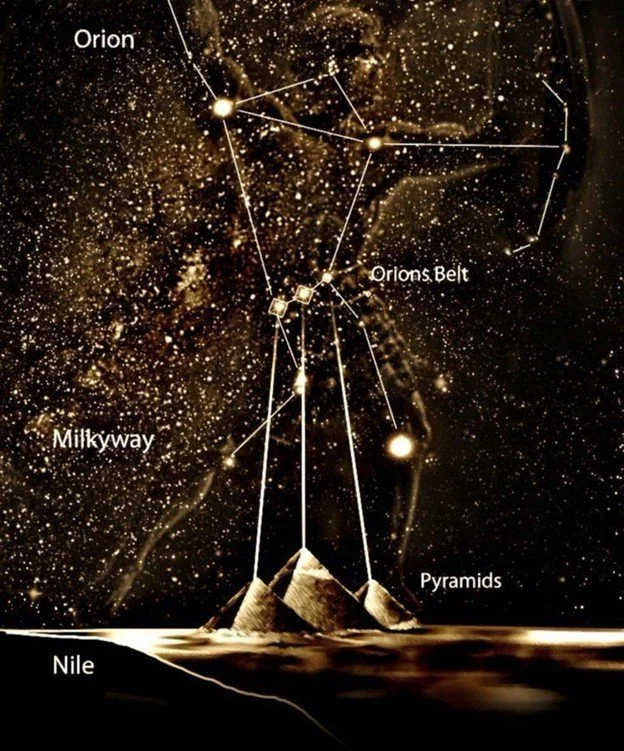
Some researchers have suggested that the pyramids encode a level of mathematical or astronomical knowledge that exceeds what is typically attributed to the period. The alignment of the three pyramids has been compared to the pattern of stars in Orion’s Belt, though the degree of correlation is debated. Others point to the internal proportions of the Great Pyramid as evidence of advanced geometric understanding, possibly reflecting knowledge of the Earth’s size or shape.
Another line of thought focuses on the materials and internal structure of the pyramids. The combination of limestone and granite, along with the specific dimensions of certain chambers, has led to speculation that the pyramids may have been designed with acoustic or vibrational properties in mind. Measurements within the King’s Chamber have demonstrated that it can resonate at specific frequencies, raising questions about whether this was intentional. While there is no scientific evidence that the pyramids functioned as energy-producing devices, their physical properties do allow for measurable resonance, leaving open the possibility that their design served more than a purely symbolic purpose.
More controversial theories propose that the pyramids may be older than currently believed, or that they were influenced by a prior civilization. This argument often centers on erosion patterns observed on the Sphinx, which some interpret as evidence of prolonged exposure to water rather than wind and sand. If accurate, this would suggest a significantly earlier date of origin. However, the majority of archaeological evidence continues to support construction during the reigns of the Fourth Dynasty pharaohs.
At the far edge of speculation are claims that the pyramids required external assistance, including theories involving extraterrestrial involvement. These ideas are not supported by credible evidence and are widely rejected by historians and archaeologists. The capabilities of ancient Egyptian society, while extraordinary, are considered sufficient to explain the construction of the pyramids without invoking non-human intervention.
What remains, after all explanations are considered, is a structure that is both understood and not fully understood at the same time. The pyramids were built as tombs. That much is supported by context, inscriptions, and surrounding structures. But their precision, their scale, and certain aspects of their design suggest that their builders were working with a level of intention that may not be fully captured by the word “tomb” alone.
SEE DEEP RESEARCH FOR MORE INFORMATION