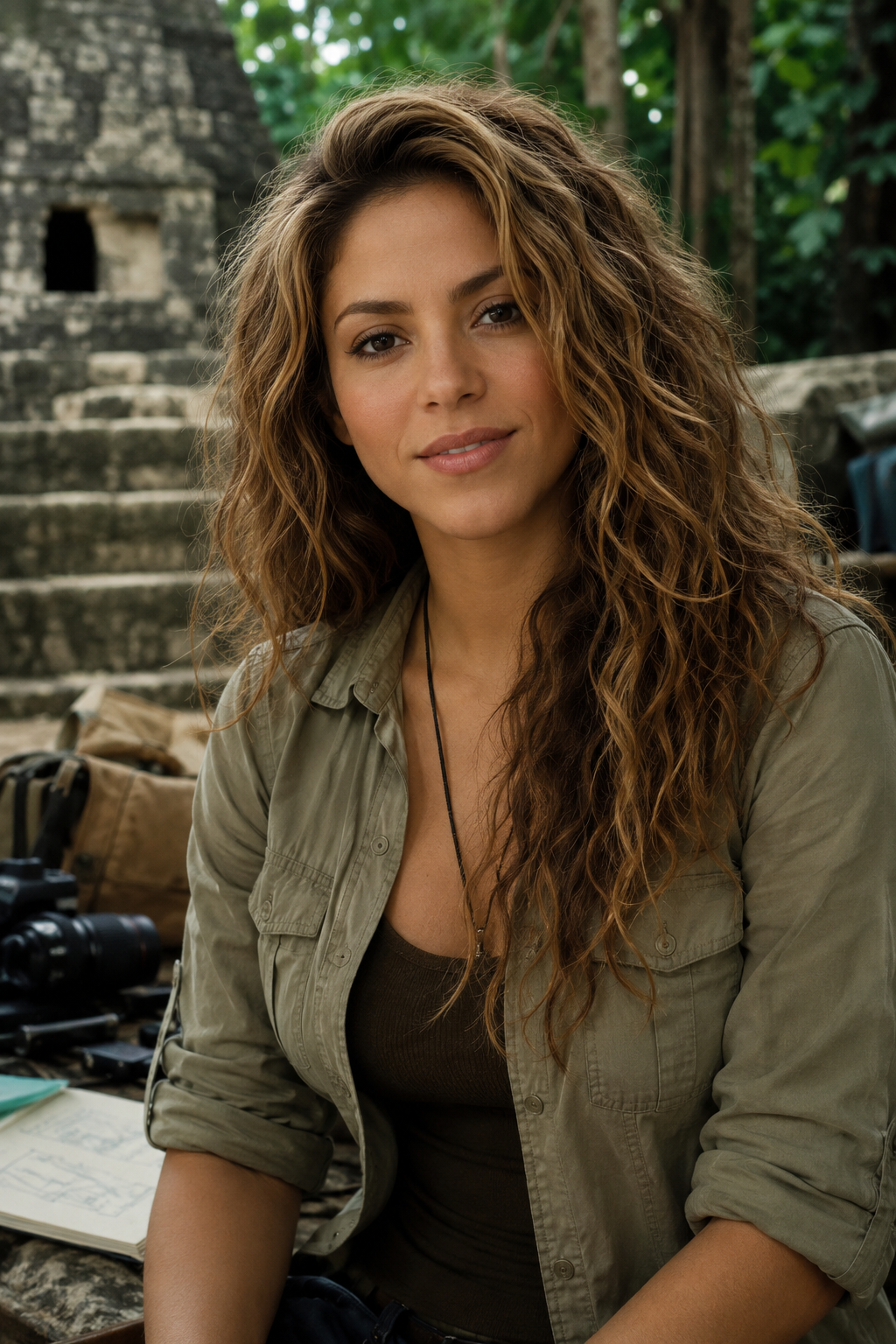
Maria Valdez
Maria Valdez was born in Guatemala and came to the United States with her family as a young child. She grew up in Bakersfield, California, in a working-class household where education was viewed as both an opportunity and an obligation. Her parents had made enormous changes in their own lives to give their children greater possibilities, something Maria understood even when she was young.
Bright, energetic, and intensely curious, Maria was the first in her family to pursue an academic career. Money was always a consideration, so her path through college was built around scholarships, financial aid, part-time work, and an unwillingness to give up when things became difficult.
Her interest in archaeology developed from a desire to better understand the civilizations of Mesoamerica, particularly the cultures that had flourished in Guatemala and southern Mexico centuries before modern national borders existed. What began as a connection to her own origins gradually became a serious academic interest.
Maria proved especially talented at research and documentation. She had an instinct for noticing details other people overlooked and an almost compulsive desire to understand how individual pieces of information fit together. Unlike researchers who preferred to specialize narrowly, Maria was interested in almost everything. Archaeology, ancient languages, acoustics, architecture, field reports, oral traditions, and new technologies could all send her down another intellectual path.
After college, she secured an internship with the Middle American Research Institute. It was an extraordinary opportunity for someone at the beginning of her career. At MARI, she was responsible for helping organize field research, observations, photographs, instrument readings, surveys, samples, interviews, and other records generated by the research teams. Deanna Ortega came to regard that function as essential, describing Maria as the keeper of the team's "institutional memory."
Maria was still young enough to be excited simply by being there. She volunteered for assignments, asked questions constantly, worked late without complaint, and possessed an enthusiasm that could spread through an exhausted field team. She could also become so absorbed in a subject that she talked about it long after everyone else was ready to move on. Her fascination with the unusual acoustics of Toniná became so intense that she joked that months of talking about acoustics may have contributed to the end of a previous relationship.
Personally, Maria is warm, outgoing, quick to laugh, and much less guarded than Chris Whiting. She is comfortable teasing him, challenging him, and drawing him into conversations he might otherwise avoid. Beneath that easy personality is considerable determination. She has spent much of her life proving that where she started did not have to determine where she could go.
For Maria, MARI is supposed to be the beginning of her career, not its culmination. She is young, ambitious, and still deciding exactly what kind of scholar she wants to become. What she knows with certainty is that she wants to spend her life discovering things that have been forgotten and understanding the people who left them behind.