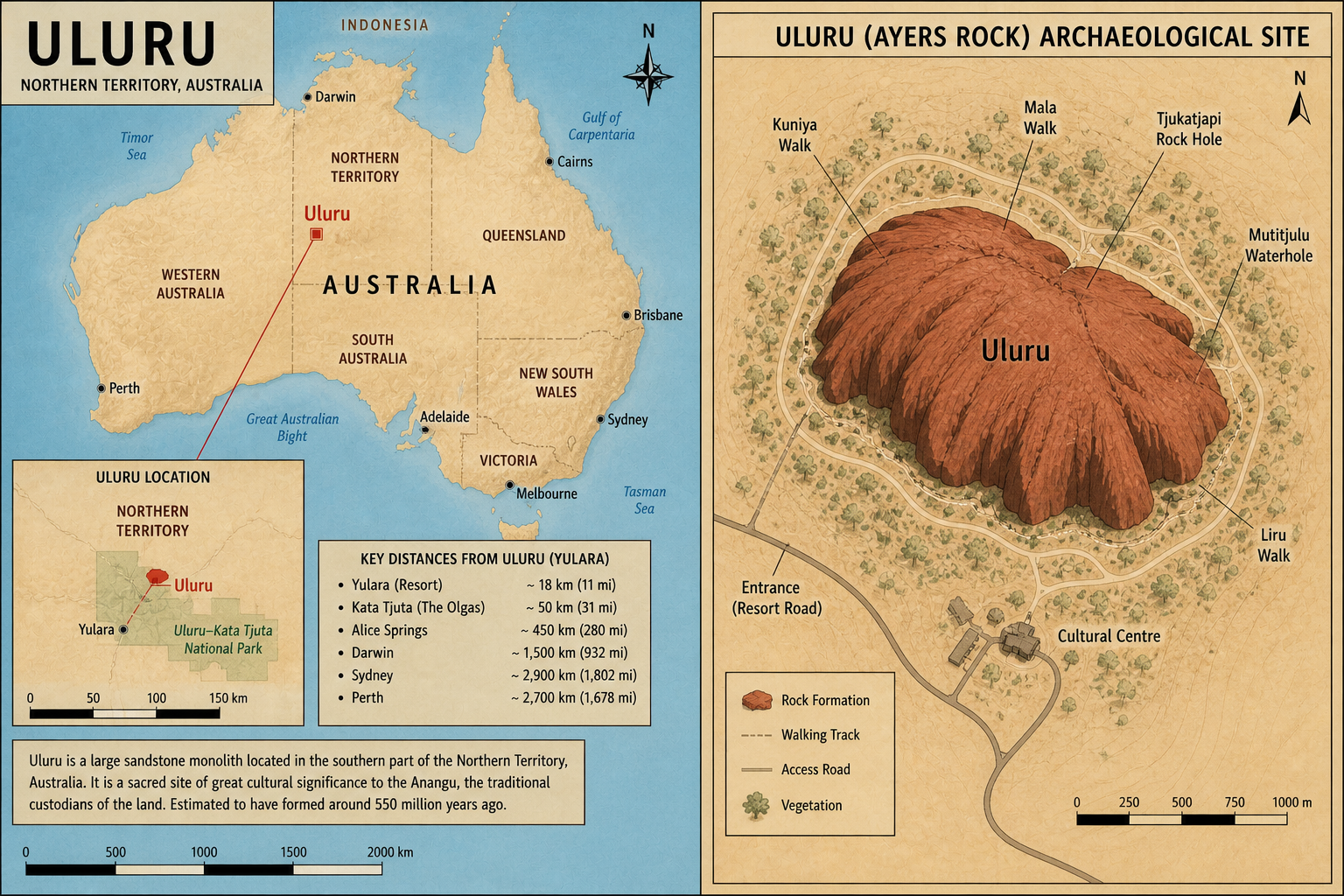
Uluru
Uluru rising from the flat, open desert of central Australia, Uluru stands alone. It is not a structure built by human hands. It is a single massive formation of sandstone, extending roughly 1,100 feet above the surrounding land and stretching more than two miles in length. Its surface shifts in color throughout the day, moving from deep reds to muted browns and, at sunset, to a glowing, almost luminous orange that seems to hold light rather than reflect it.
Geologically, Uluru was formed over hundreds of millions of years. It began as sediment deposited in an ancient inland sea, compressed into rock and later lifted, tilted, and exposed through erosion. What remains is the visible portion of a much larger mass that extends deep below the surface, its full scale hidden beneath the desert. Unlike constructed sites, its form is not the result of design in the conventional sense. And yet, in the context of human history, Uluru has been treated as something more than a natural feature.
For the Anangu people, the traditional custodians of the land, Uluru is not simply a landmark. It is a living presence, inseparable from the stories, laws, and identity of those who have known it for tens of thousands of years. Their understanding of the world is grounded in what is often referred to as Tjukurpa, a system of knowledge that encompasses creation stories, moral law, and the ongoing relationship between people and the land.
Within this framework, Uluru is both a place and a record. Its surface is marked by features that correspond to ancestral events, stories that describe the actions of beings who shaped the land and established the patterns of life. These stories are not metaphor in the modern sense. They are treated as reality, existing in a time that is not separate from the present but continuous with it. The rock itself holds these events. It is not a symbol of them. It is part of them.
Certain areas of Uluru are associated with specific narratives, some of which are restricted and not shared outside the community. Others are more widely known, describing journeys, conflicts, and transformations that took place across the landscape. These stories often involve movement through the land, with Uluru serving as a point of convergence, a place where paths cross and events resolve.
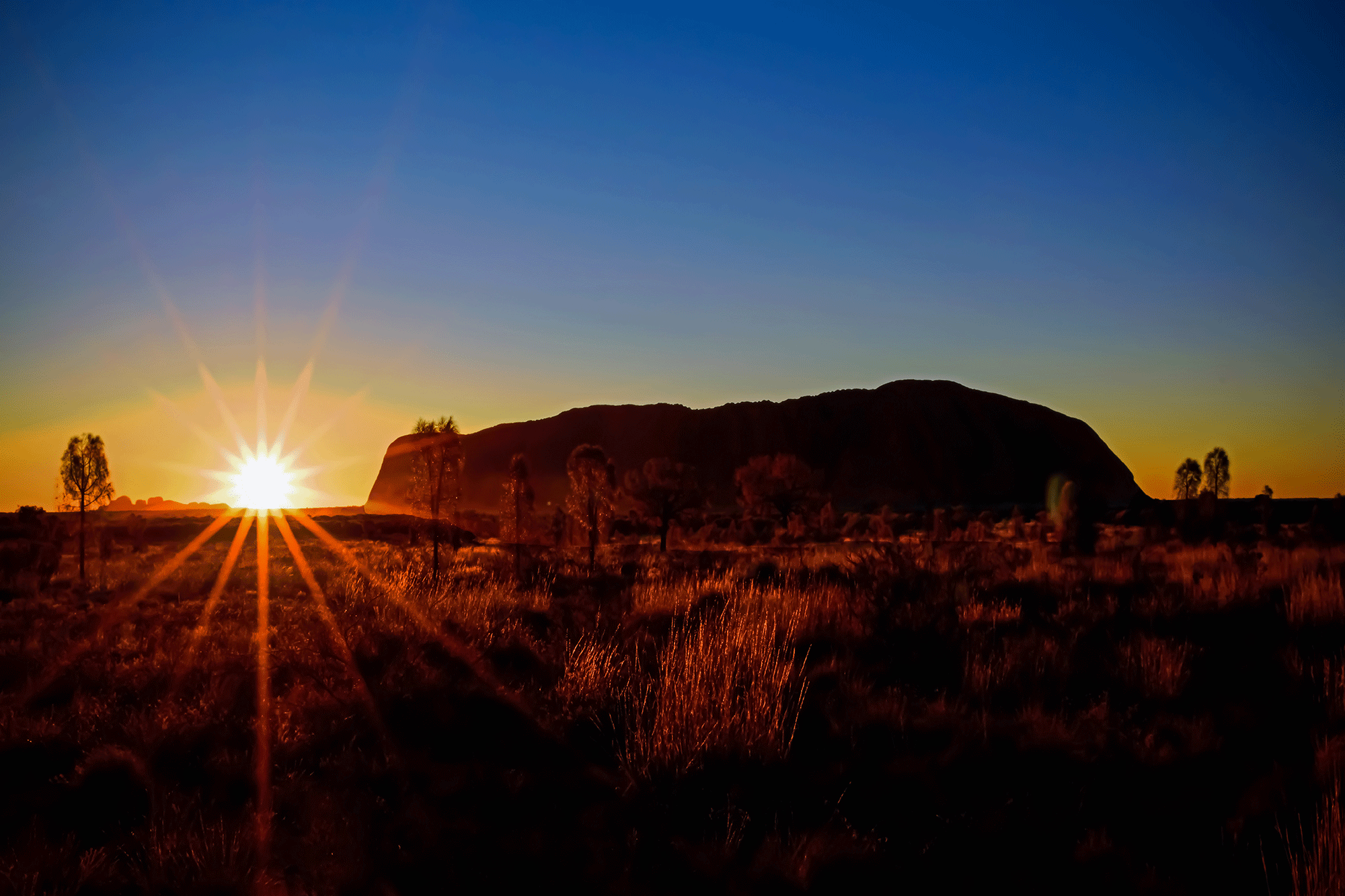
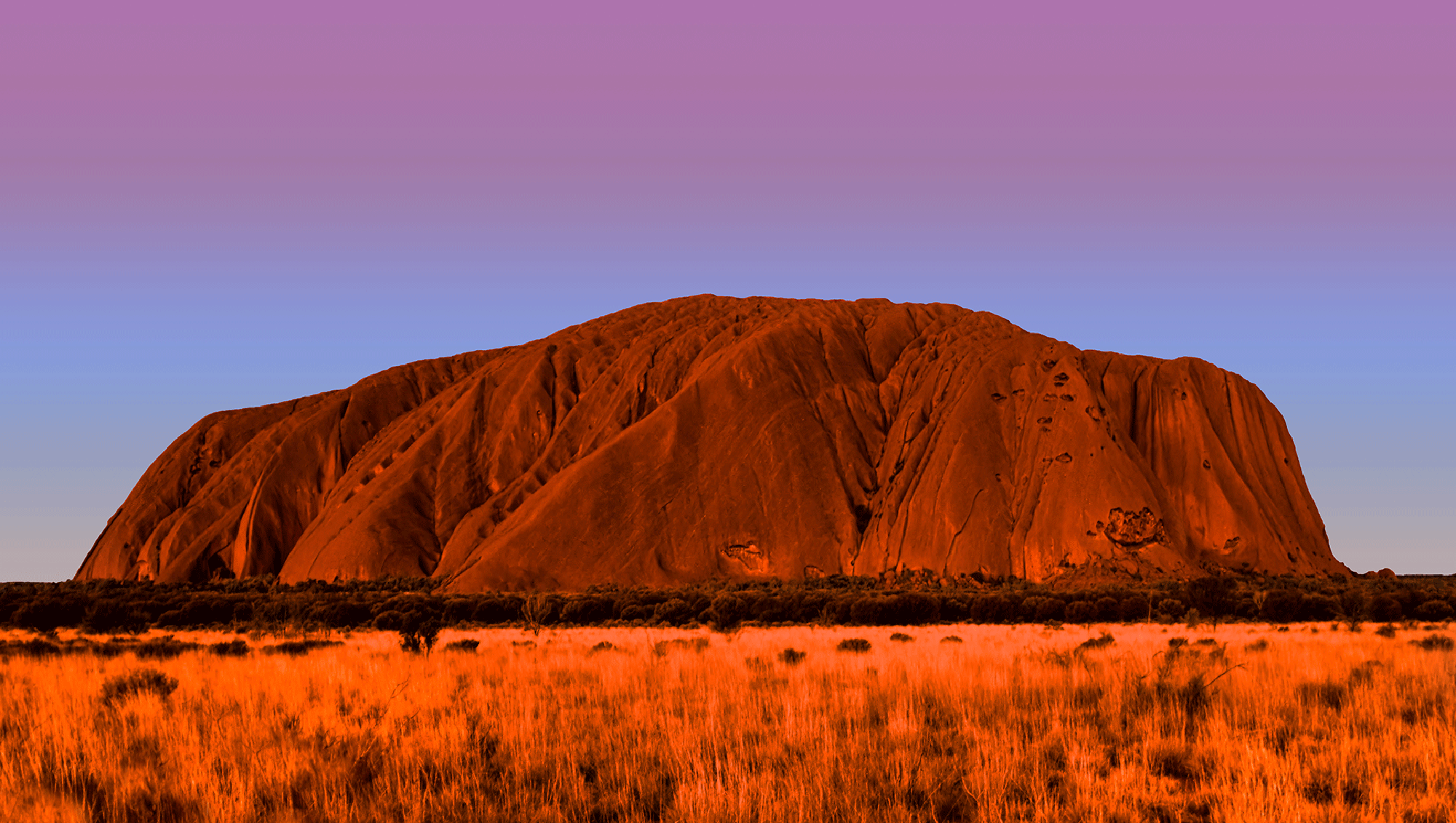
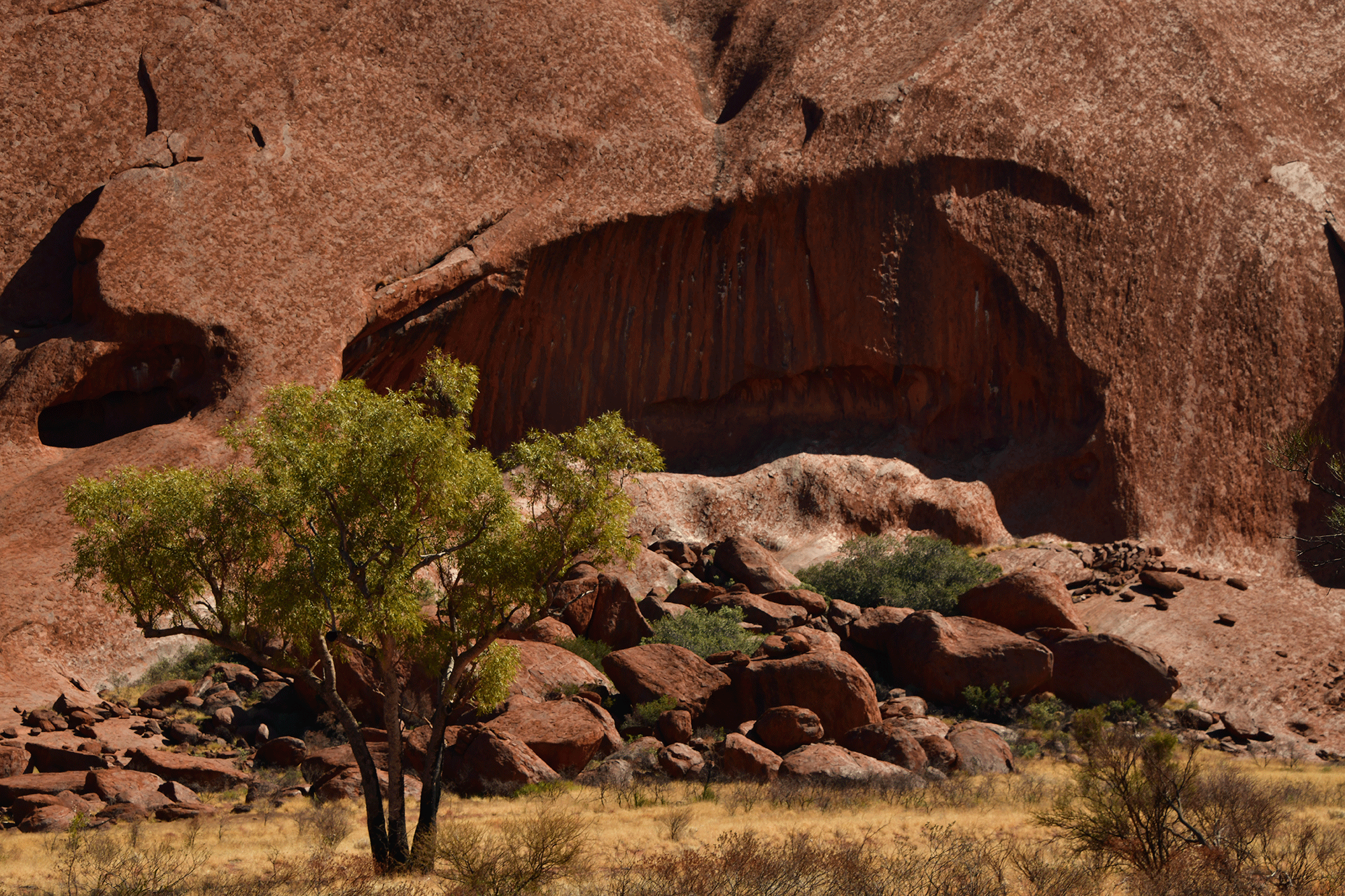
Photos by D. Nessi
What stands out in these accounts is the sense that Uluru is not passive. It is not simply observed. It participates. It responds. It carries presence.
There are also physical aspects of Uluru that contribute to this perception. The rock contains fissures, caves, and overhangs that create enclosed spaces where sound behaves differently. Voices can carry, echo, or dampen depending on position and angle. Wind moving across the surface produces shifting tones, subtle but persistent. The temperature changes of the desert cause expansion and contraction within the stone, sometimes producing quiet cracking sounds that seem to come from within the rock itself.
For a culture attuned to the land, these are not incidental effects. They are part of the experience of the place. Sound, movement, and presence are not separate categories. They are expressions of the same underlying reality.
Some interpretations, particularly from outside the traditional knowledge system, have suggested that Uluru may function in a way that resembles resonance, not in a mechanical or engineered sense, but as a natural amplifier of environmental and human interaction. The size, density, and composition of the rock allow it to absorb and reflect energy, whether in the form of sound, heat, or vibration. While there is no scientific framework that defines Uluru as a “resonant structure” in the way one might describe a constructed device, its physical properties do allow for measurable interactions with its environment.
What is more significant is how those interactions are understood. For the Anangu, the meaning of Uluru is not derived from analysis of its properties, but from lived relationship. The stories associated with the site describe a world in which the land itself holds memory and intention. In that context, what might be described as resonance in physical terms becomes something broader, a continuity between past and present, between action and place.
Uluru differs from the other sites in one fundamental way. It was not built. It was not shaped by human design. And yet, it has been recognized, engaged with, and preserved as a site of profound importance for longer than any constructed monument on Earth.
It is a natural formation that carries meaning as if it were constructed.
A presence that has been interpreted, not created.
A place where story and landscape are inseparable.
In a broader view, Uluru introduces a different possibility. That not all significant sites were built. Some were found.
FOR MORE INFORMATION SEE DEEP RESEARCH